dimanche 18 août 2013

Des légumes bio et des pots / Organic vegetables and pots

Article de Francesca Bocci
L'article en ligne, the post online in french


Corinne et Eric cultivent des légumes bio à Parlevent, Bangor et accueillent tous les ans des artistes dans leur local de vente. Incapable de rester en place, dès le mois de juillet, j'ai demandé à exposer mes céramiques chez eux, ils ont tout de suite accepté de me recevoir. Vous pouvez les voir tout le mois d'août et faire votre marché en même temps. Les melons sont délicieux, mais aussi, tomates, courgettes, aubergines, salades et j'en passe, bon appétit !!!

Corinne and Eric grow organic vegetables, Parlevent, Bangor and welcome every year artists in their local. Unable to sit still, in the month of July, I asked them to exhibit my pots, they immediately agreed to show my work. You can see the pots, the whole month of August and go shopping together. Melons are delicious, but also tomatoes, zucchini, eggplants, salads and so on, bon appetit!

lundi 5 août 2013

Les fours de Sawankhalok à Ban Pa Yang / Sawankhalok kilns, Ban Pa Yang kiln site

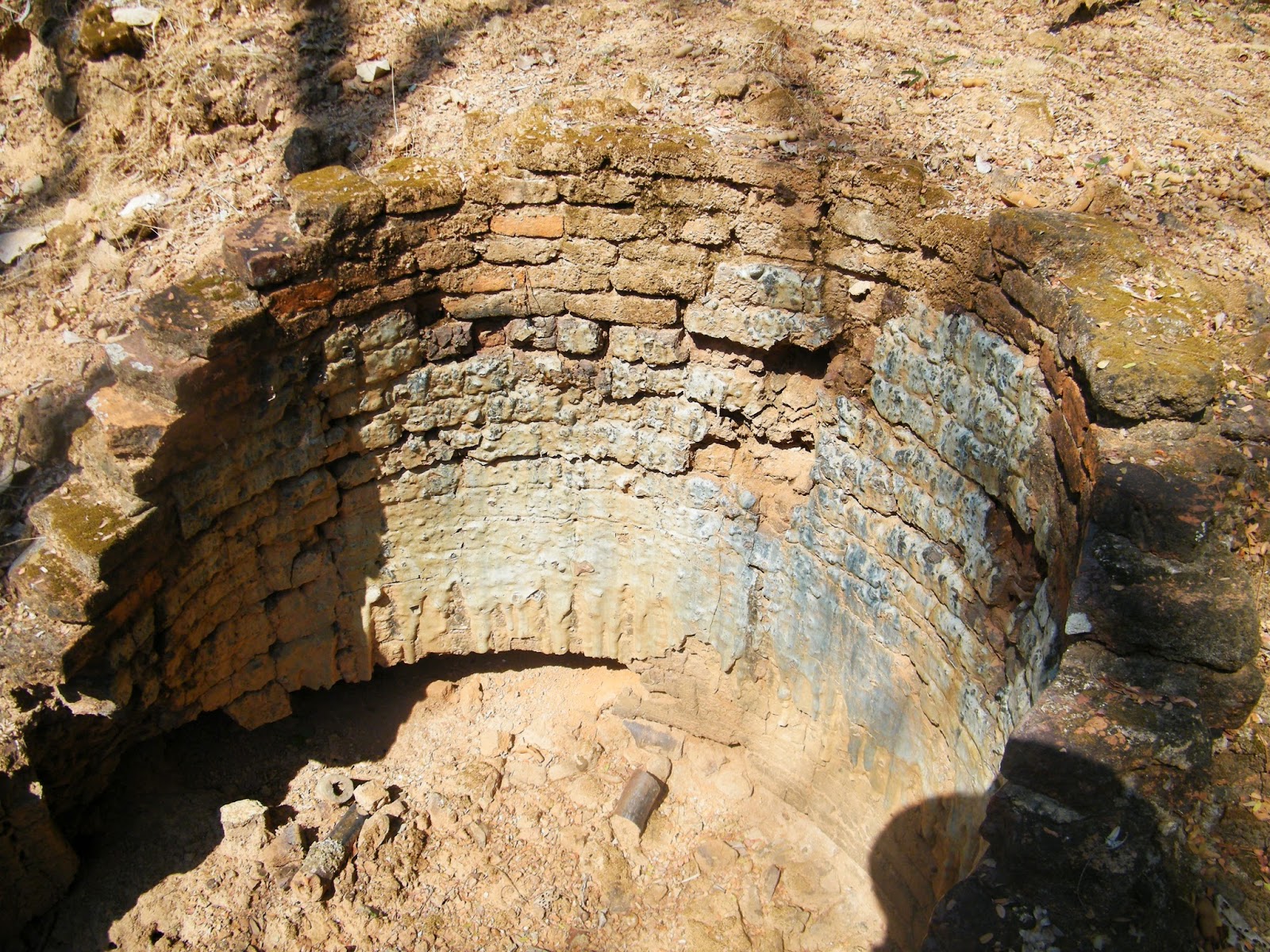
Le site des fours de "Ban Pa Yang" est situé le long de la rivère Yom, à cinq kilomètres au nord de l'ancienne ville de Si Satchanalai, actuellement inscrite au patrimoine mondial de l'UNESCO. Ce groupe de fours a une forme en "goutte d'eau". Le four dit four Thuriang, comprenait trois parties, l'alandier devant, la chambre où sont placés les poteries et la cheminée au bout du four. La température de cuisson pouvait atteindre 1250° à 1300° celsius pour produire des poteries de grès, haute température.

La période florissante des grès de Sawankhalok, ou Sangkhalok a duré 200 à 250 ans ans, entre le 14éme et le 16 ème siècle.
Ces poteries étaient populaires, non seulement en Thaïlande, mais aussi dans l'Asie du sud est et au Japon.
Beaucoup de pièces ont été retrouvées dans des navires naufragés dans le golfe de Thaïlande, mais aussi sur des sites archéologiques dans d'autres pays, comme l'Indonésie, les Philippines et le Japon.

The kilns of "Ban Pa Yang" are located along the Yom River, five kilometers north of the ancient city of Si Satchanalai currently listed as World Heritage by UNESCO. This group of kilns are crossdraft and have a water-dropped shape. The Thuriang kiln had three parts, the firebox,  the chamber pottery and the chimney at the rear of the kiln. The firing temperature can reach 1250 ° to 1300 ° Celsius to produce stoneware pottery.

The flourishing period of Sawankhalok or Sangkhalok ware lasted 200 to 250 years years, between the 14th and 16th century.
These pots were popular not only in Thailand but also in Southeast Asia and Japan.
Many pieces have been found in shipwrecks in the Gulf of Thailand, but also on archaeological sites in other countries, such as Indonesia, the Philippines and Japan.

The perspective is distorted
 Malgré la distorsion de la perspective l'on peut voir la façon dont la forme est construite entre la chambre et la cheminée, probablement pour améliorer le tirage.

Despite the distortion of perspective we can see how the shape is built between the chamber and the chimney, probably to improve the draw.

Blue glaze in the chimney


Sur tous les fours, à l'extérieur, l'alandier est enterré et n'est plus visible, mais on peut voir le mur qui sépare l'alandier de la chambre plus en hauteur, à l'intérieur du four et l'on peut voir également l'émail bleu qui recouvre les parois de la cheminée.

On all the kilns, outside, the firebox is buried and is no longer visible, but you can see the wall that separates the firebox from the chamber higher up in the kiln and you can also see the blue glaze that covers the walls of the chimney.

Close up to the blue glaze

 A l'intérieur de certains fours, la cheminée est construite avec des quilles d'enfournement.

Inside some kilns, the chimney is built of loading keels.


Ban Ko Noi kiln
 Le site de Ban Ko Noi fera l'objet d'un autre article.
 Vous pouvez aussi voir les lien suivant : http://armelleleon.blogspot.fr/2013/02/sawankhalok-si-satchalanai-chaliang.html

I will speak about Ban Ko Noi site another post.
You can also see the following link: http://armelleleon.blogspot.fr/2013/02/sawankhalok-si-satchalanai-chaliang.html

mercredi 17 juillet 2013

Gwyn Hanssen Pigott


Gwyn Hanssen Pigott at the opening of her solo exhibition at Erskine, Hall & Coe in London in June 2013. Photograph: Michael Harvey/courtesy of Erskine, Hall & Coe
"The way the pots transform in light is something special to me because this reflects what we are as human beings, ordinary but with the possibility of joy."

Gwyn Hanssen Pigott, potter, born 1 January 1935; died 5 July 2013

...Gwyn Hanssen Pigott, who has died aged 78, was Australia's most distinguished potter. Because she had learned much of her craft in England, training with some of its best-known figures, and had set up her first studio in London, she achieved honorary status as an important British artist as well. The association with Britain has been rekindled in a memorable series of exhibitions in the UK over the past 20 years, and it was while visiting London for the latest of these that she suffered a stroke..

To read more : The Gardian

 I do not know when I saw the link to this Parade  by Gwyn Hanssen Picott arranging the pots of Freer & Sackler's collection, it is a great pleasure to watch online so beautiful pieces installed tastefully by the Australian potter who has just died, this is an example and an important influence for me. there are pots of Persia, China, Japan and Korea.

Here is the link: http://www.asia.si.edu/exhibitions/online/Parades/launch.htm

Click on "the ceramics" to see the Parade, on each piece to enlarge on "about the artist" for the portrait of Gwyn Hanssen.

 «La façon dont les pots transforment la lumière est quelque chose de spécial pour moi parce que cela reflète ce que nous sommes en tant qu'êtres humains, ordinaires, mais avec la possibilité de la joie."

Gwyn Hanssen Pigott, potière, née le 1er Janvier 1935, décédée le 5 Juillet 2013

...Gwyn Hanssen Pigott, qui est morte âgée de 78 ans, était la potière la plus distinguée d'Australie. Parce qu'elle avait fait son apprentissage en Angleterre, formée par certaines de ses figures les plus connues, et avait ouvert son premier studio à Londres, elle a obtenu le statut honorifique d'une des meilleures artistes britanniques . L'association avec la Grande-Bretagne a été ravivée dans une série mémorable d'expositions au Royaume-Uni au cours des 20 dernières années, et elle était alors en visite à Londres pour la dernière d'entre elles lorsqu'elle a subi un accident vasculaire cérébral ...

Pour en savoir plus : The Gardian

Je ne sais plus quand j'ai vu le lien de cette Parade de Gwyn Hanssen Picott arrangeant les pots de la collection Freer & Sackler, c'est un grand plaisir de pouvoir voir en ligne de si belles pièces installées avec goût, par cette potière australienne qui vient de décéder, c'est un exemple et une influence importante pour moi. Il y a là des pièces de Perse, Chine, Japon, Corée.

Voici le lien http://www.asia.si.edu/exhibitions/online/Parades/launch.htm
Cliquez sur "the ceramics" pour voir la Parade, sur chaque pièce pour l'agrandir, sur "about the artist" pour avoir le portrait de Gwyn Hanssen.